Springbig's Email Editor
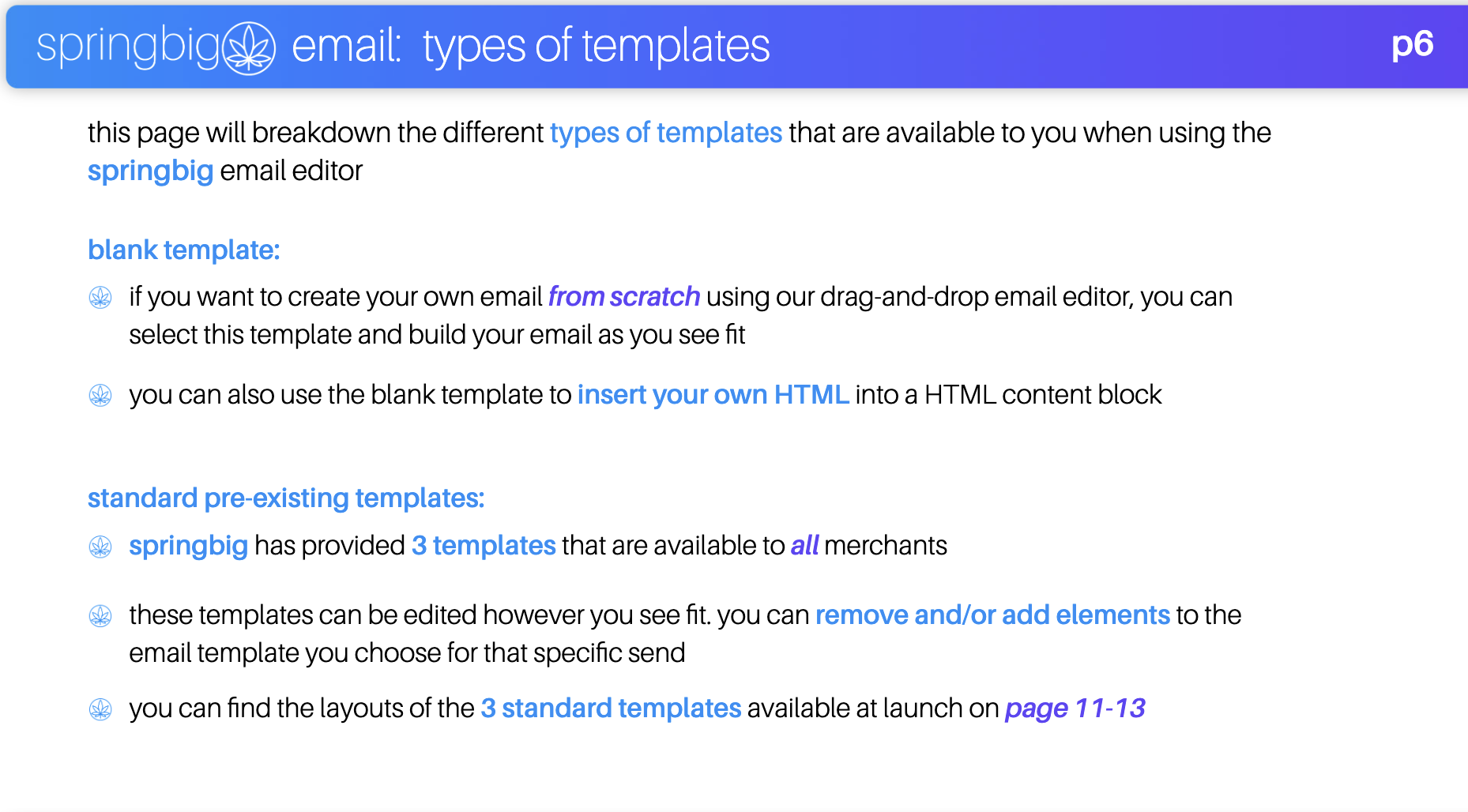
Springbig’s Email Editor allows you to create customized email templates. Use our drag and drop email editor with tons of customization options. Pair this with Springbig’s customer segmentation and extension tools to connect with your customers in new ways.
In this course, learn how to create an email, what you can add to your emails, and see how you can use your favorite Springbig tools like recipient filtering and extensions.
Table of Contents
Part 1: Email Video Review
Check out this video showing the Email Editor:
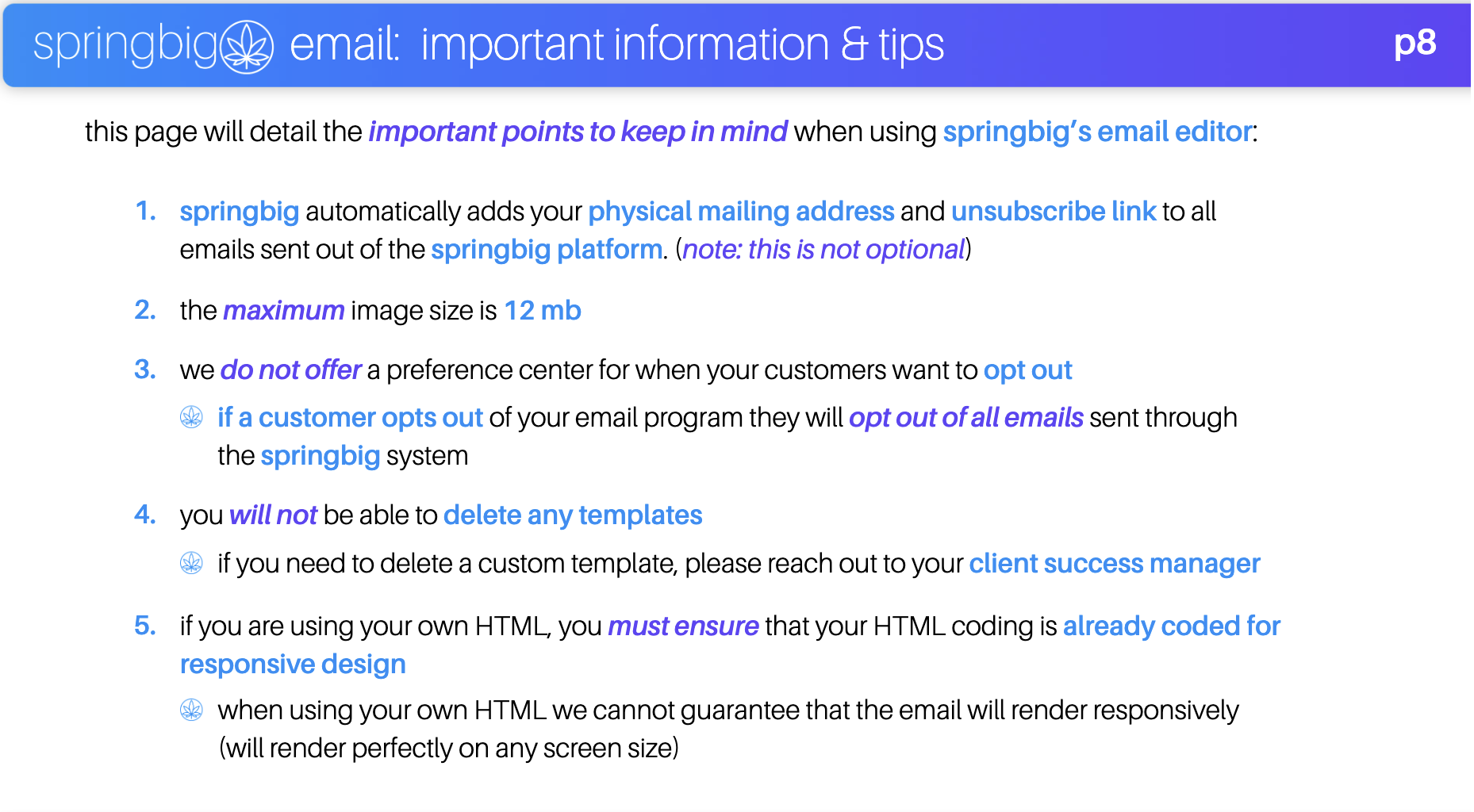
Note: You can now create, save, and delete templates from your own platform, when looking at templates you can click delete.
Part 3: Explore Our Email Editor
Content:
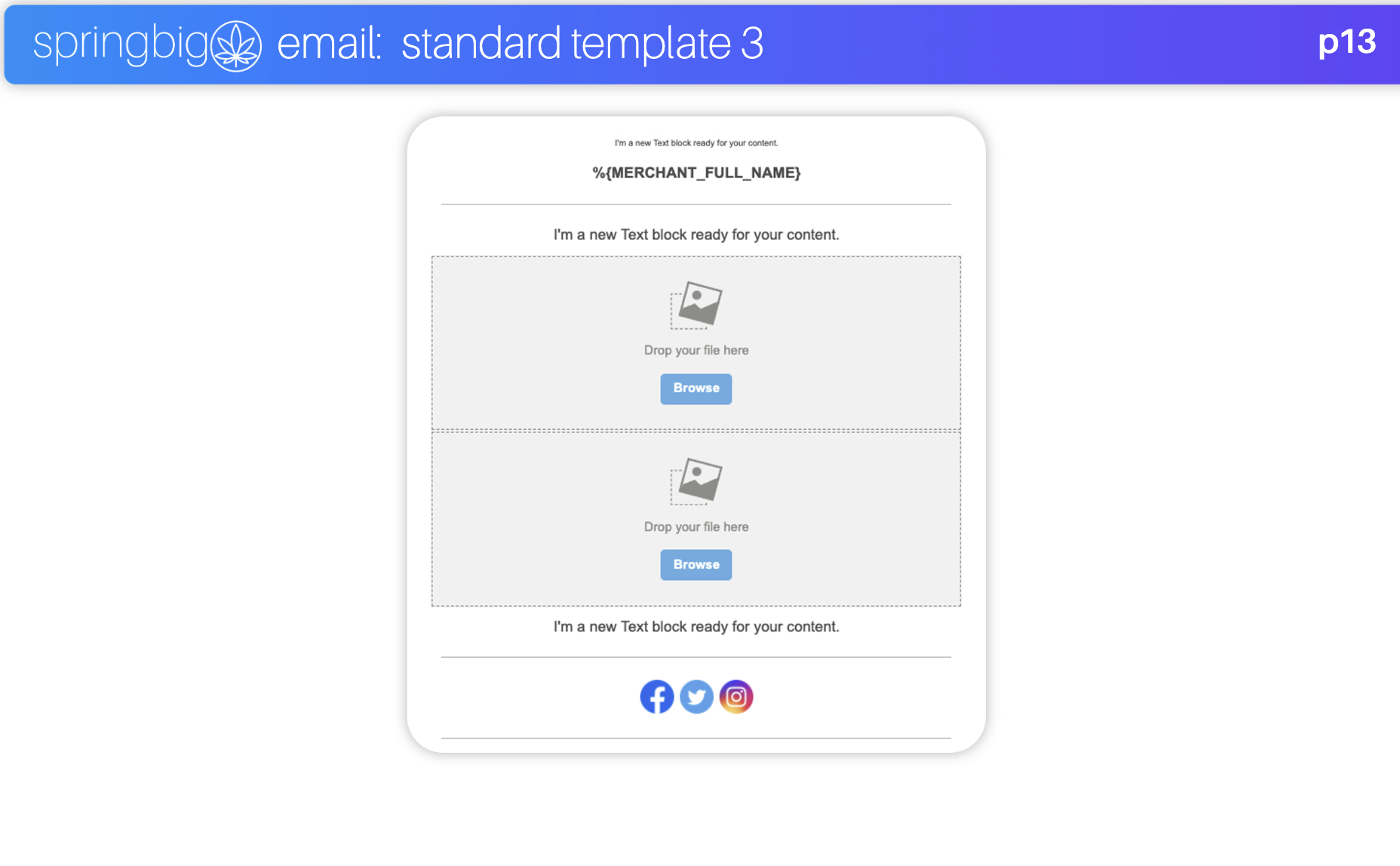
Our drag and drop content options allow you to build your email, your way.
Title – Header text
Images – Can add a URL to each image if you choose
Button – Add a link to your desired destination
Divider – Add to the design of your email
Social – Completely customizable
HTML – Add in your desired script
Video – Link YouTube or Vimeo videos
Rows
Rows allow you to configure the layout of your content items
Settings
Adjust the content sizing and alignment
Choose your desired font and colors from the color wheel or by inputting a Hex Code
Part 4: Sending Emails
Here are some tips for sending emails:
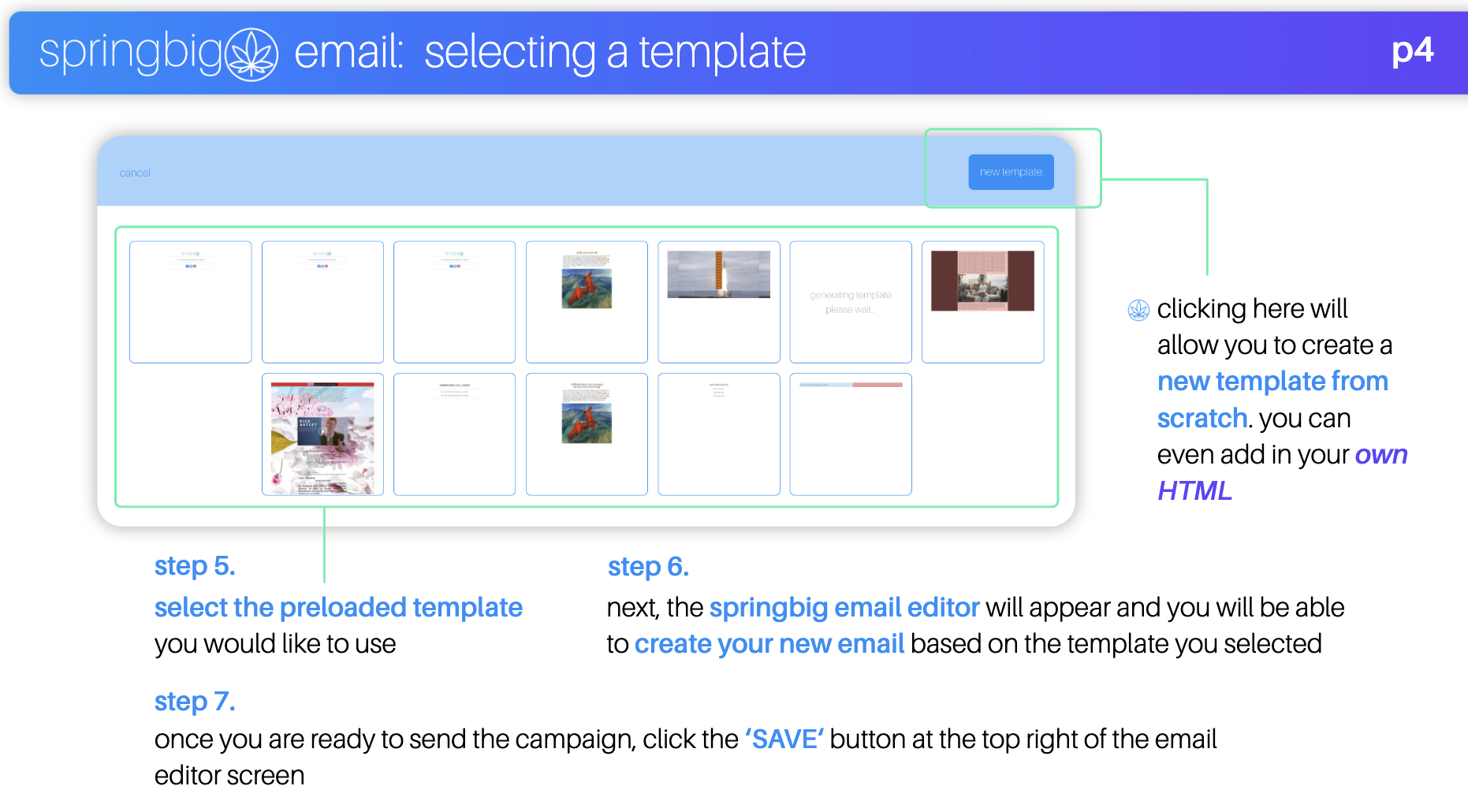
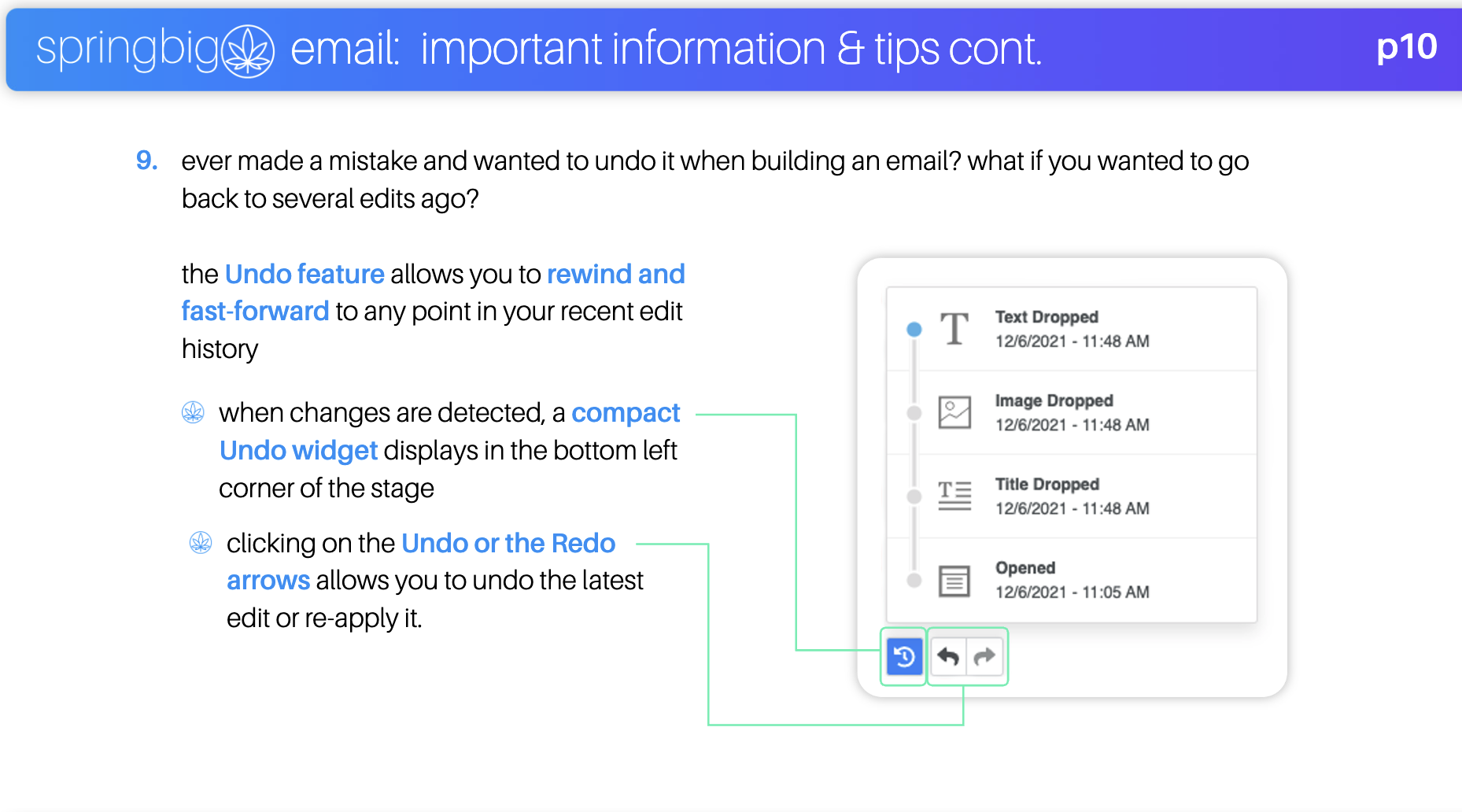
Save templates that you can easily use or edit in the future
Preview your email for mobile / desktop view and even dark or light mode
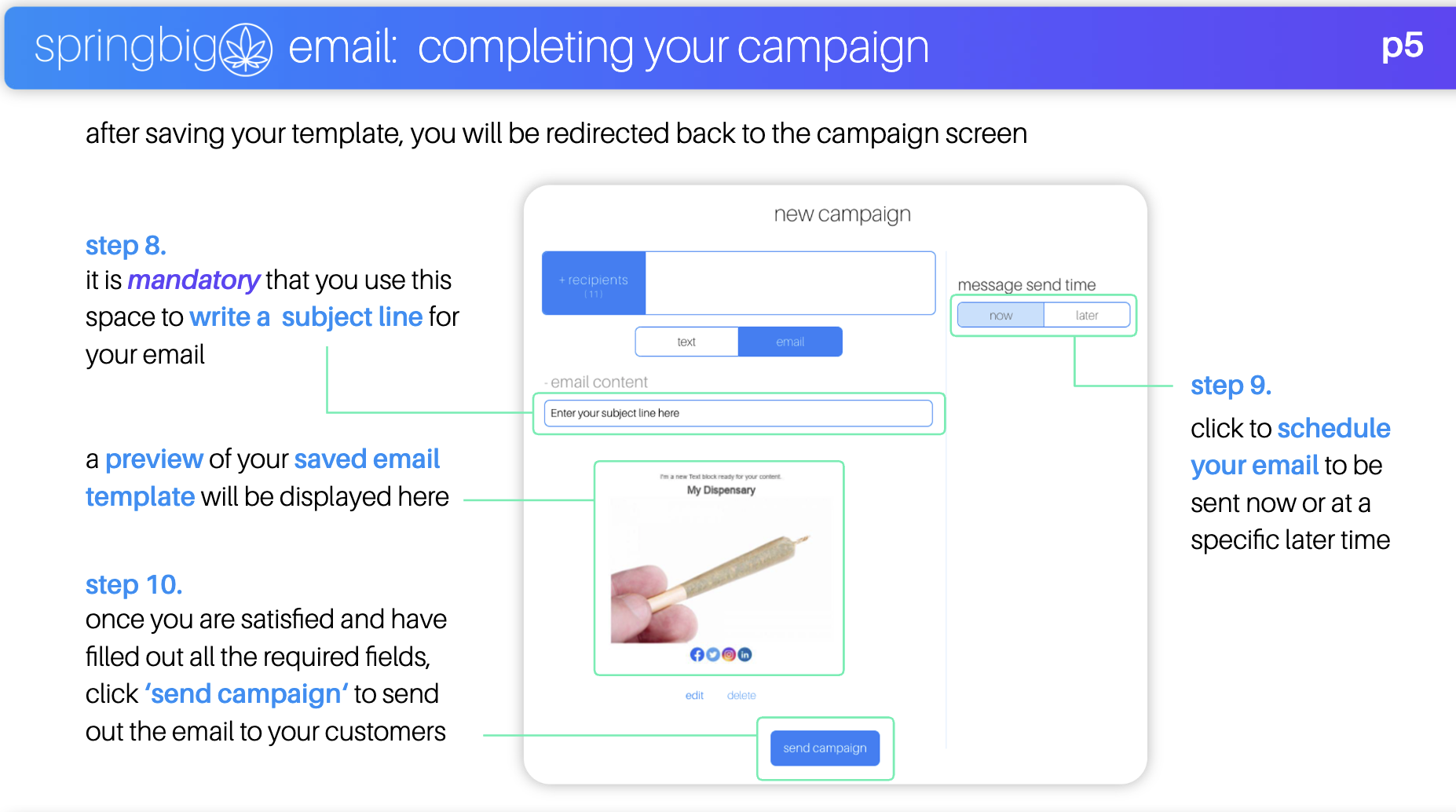
If you are sending a standalone email without a text or app campaign, click the ‘- text message’ button to close the text box.
You can also use the send method tool to prioritize what kind of message your recipients will receive for customers opted into multiple message types: text, email, and app notification.
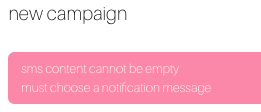
Note: If you have an empty text box on any campaign, whether it’s a single field in your extension that wasn’t filled out or you have an open campaign content box, your campaign will not allow you to send. Watch out for warnings like the one below and double check to make sure all the content you want to feature is completely filled out.
Check out this video showing how to close the text message campaign creator to send only an email campaign:
Part 5: Email Merge Tags
With email merge tags, we’ve expanded our data points, providing you with an unprecedented level of personalization for your email campaigns using our Merge Tags feature within our email builder! From basic information like name, email address, and points, to more advanced data fields based on customer transactions, you can harness the power of these data points to create hyper-personalized and engaging content.
Available merge tags:
Merchant Name
Merchant DBA
Customer First Name
Customer Last Name
Customer Points Balance
Customer Points Earned Last Visit
Customer Date of Points Expiration
Customer Email Address
Customer Expiring Points
Customer Last Purchase Date
Customer Last Purchase Spend Amount
Customer Medical Card Expiration Date
Customer Number of Days Since Last Visit
Customer Total Lifetime Spend
Customer Total Number of Visits
Customer Wallet Link
Last Transaction Location
Primary Location
How to use email merge tags:
Note: We highly recommend Merchant’s test and confirm which data fields have data that will populate data in your customer’s email. Not every Merchant integrates all these data fields, so please be aware of what customer data is available. Whatever data is in these fields will display in the email.
Step 1: Open the email creator
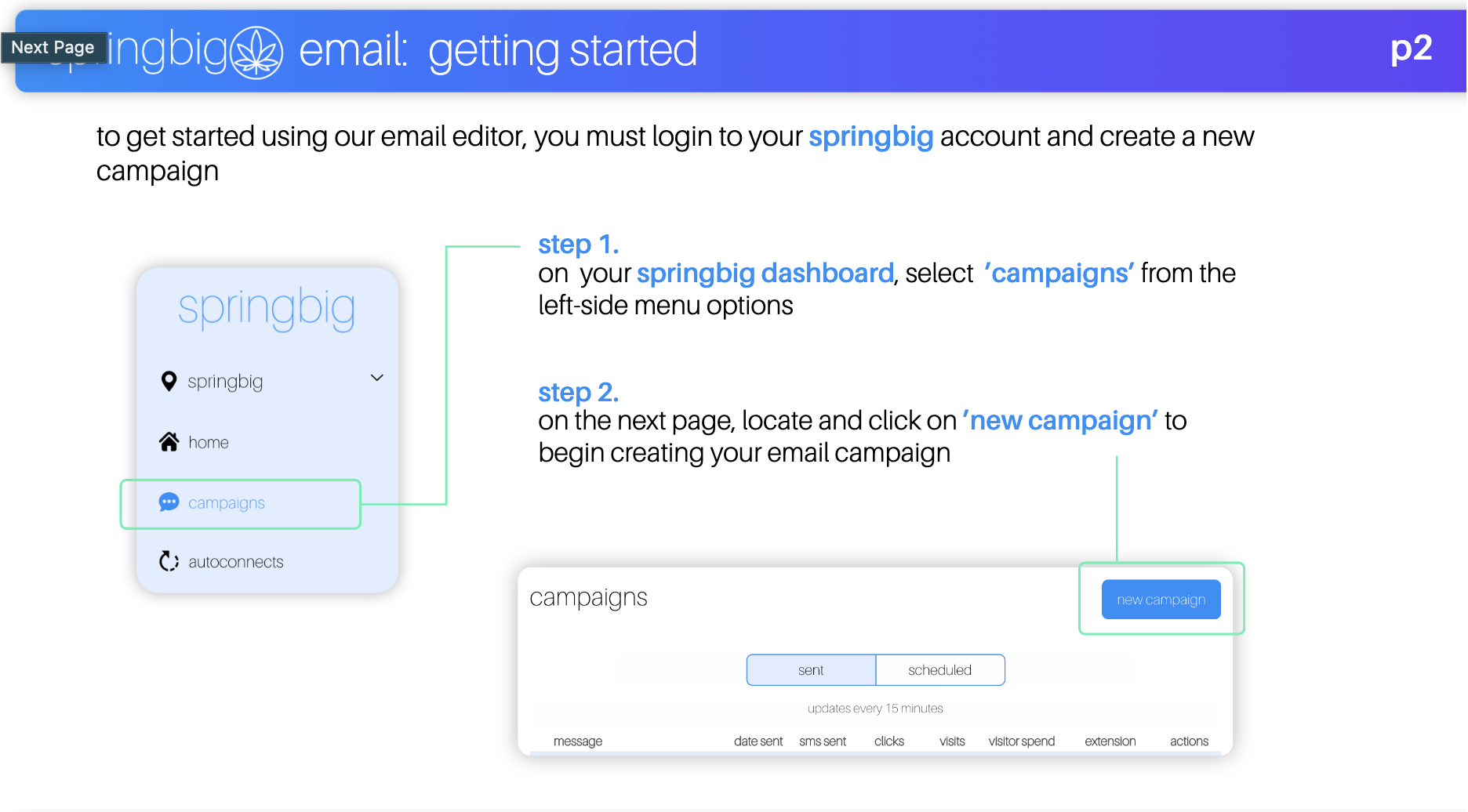
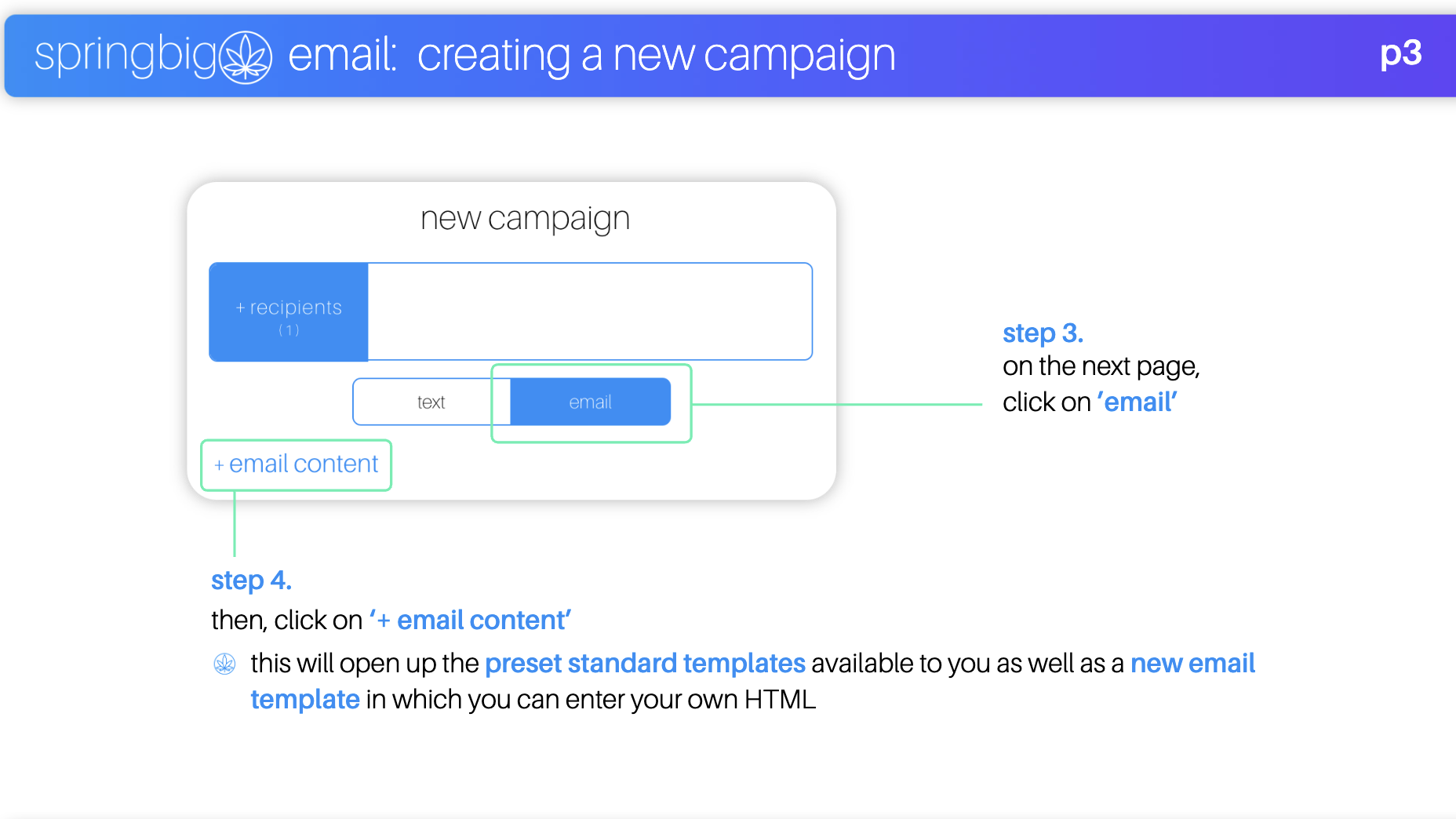
To create an email, click the +add email button on the campaign creation page.
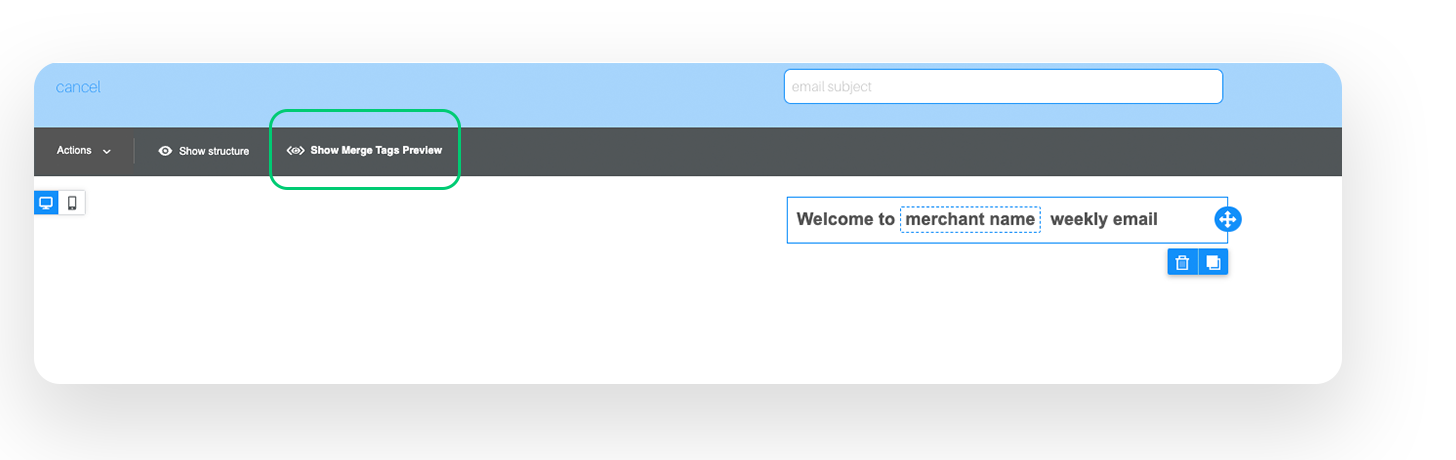
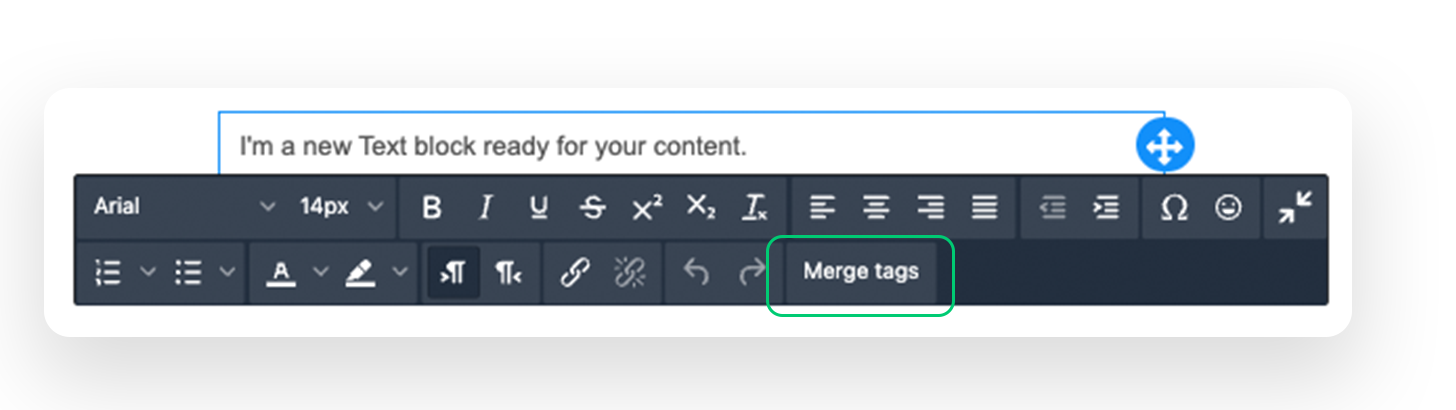
Step 2: Add a text box and click the merge tags button.
Step 3: Select merge tags
Once Merge tags are clicked, a popup will display all merge tag fields.
Note: All merge tag fields will display again even if your customer database does not have data under those fields. Please make sure the merge field you select has data
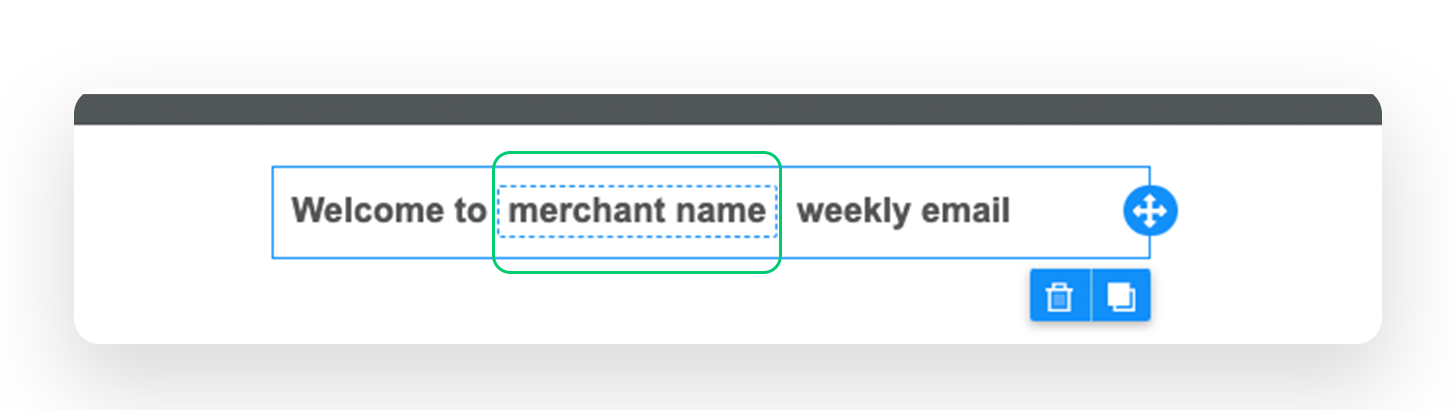
Step 4: Make sure your merge tag is formatted properly
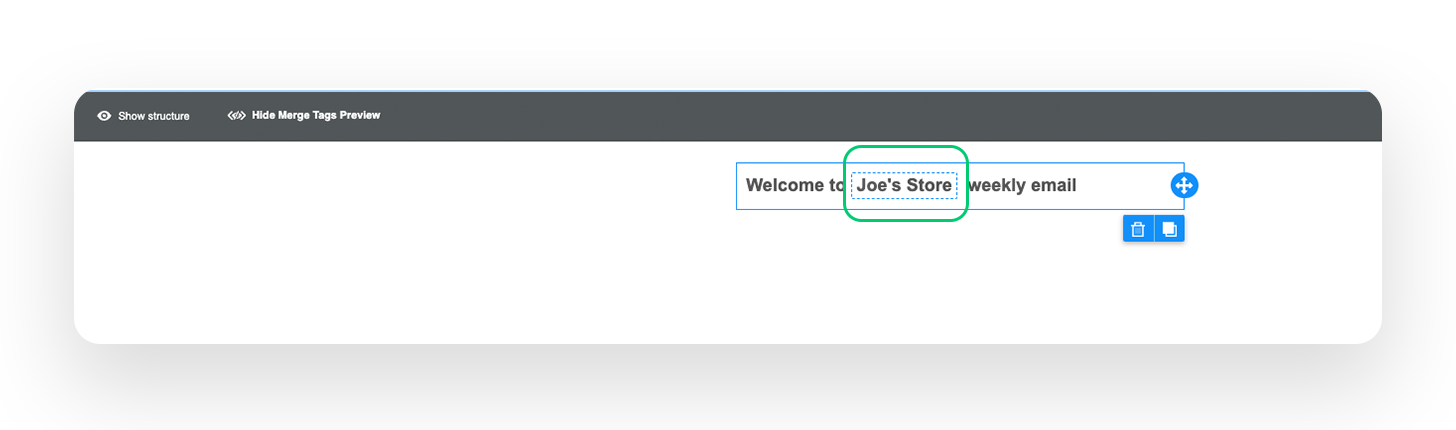
Once a merge tab is entered it will display as the following:
Part 6: Merge Tags Video Review
Check out this preview of how to use merge tags in your emails:
Part 7: Email AI Assistant
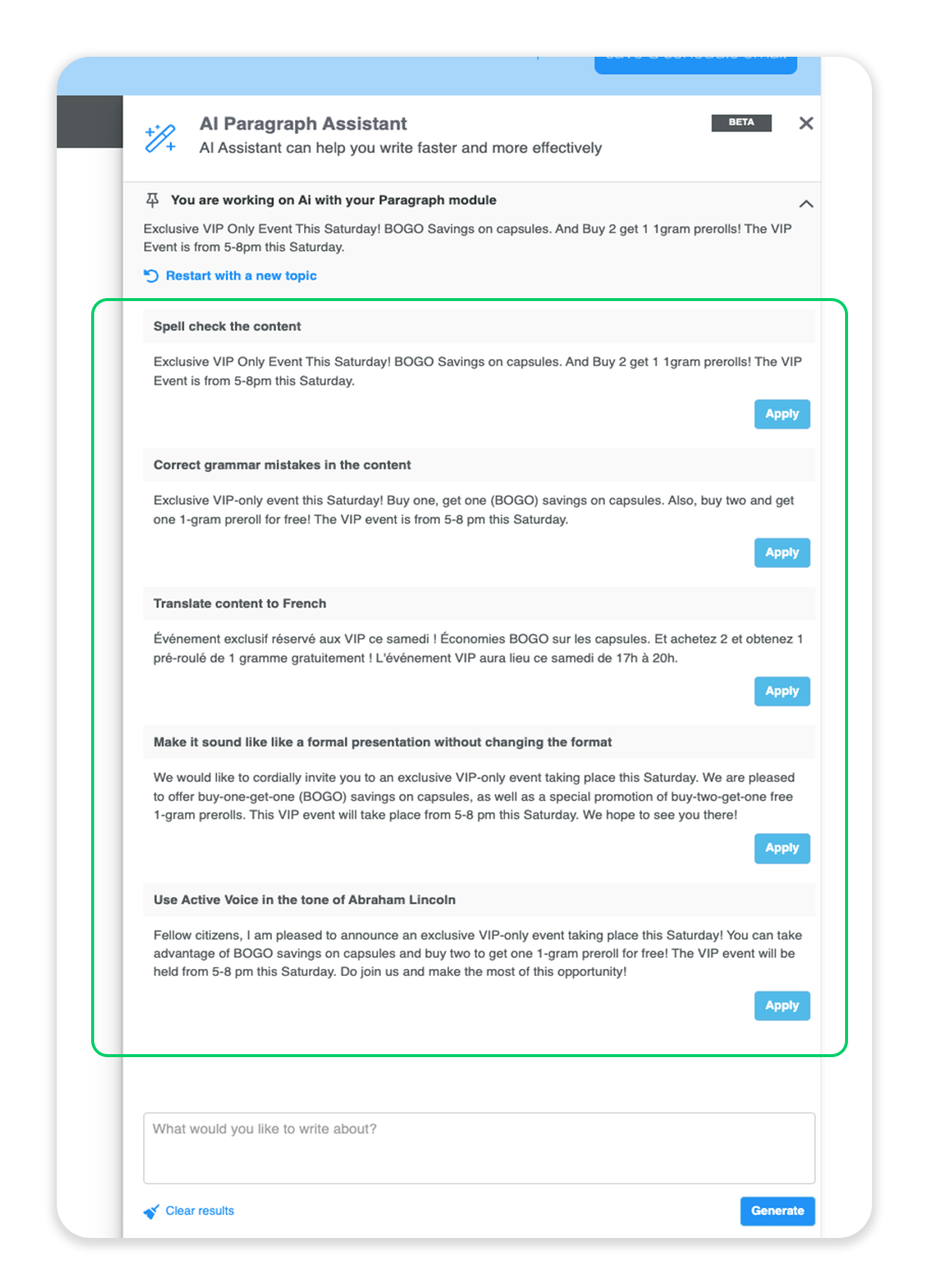
This feature provides the ability to spell check, correct grammar mistakes, translate to whatever language you want, as well as put in a tone for your content, and even shorten to a specific character length!
The AI Assistant is available within the 4 following content blocks:
Paragraph
Spell-check the content
Correct grammar mistakes in the content
Translate content to [language]
Make it [tone] without changing the format
Use Active Voice
Summarize the content
Convert the content to the third person without changing the format
Button
Translate the button label to [language]
Make it [tone]
Use Active Voice
List
Spell-check the content
Correct grammar mistakes and return the content
Translate content to [language]
Make it [tone] without changing the format
Use Active Voice
Title
Capitalize it
Capitalize all the first words in the text
Make it [number] characters long
Make it [tone] without changing the format
Translate it to [language]
You can even utilize the AI Assistant to come up with variations of subject lines!
Here is the AI Assistant in action within the paragraph content block:
Part 8: Email AI Video Review
Check out this preview of how to use this tool in your emails:
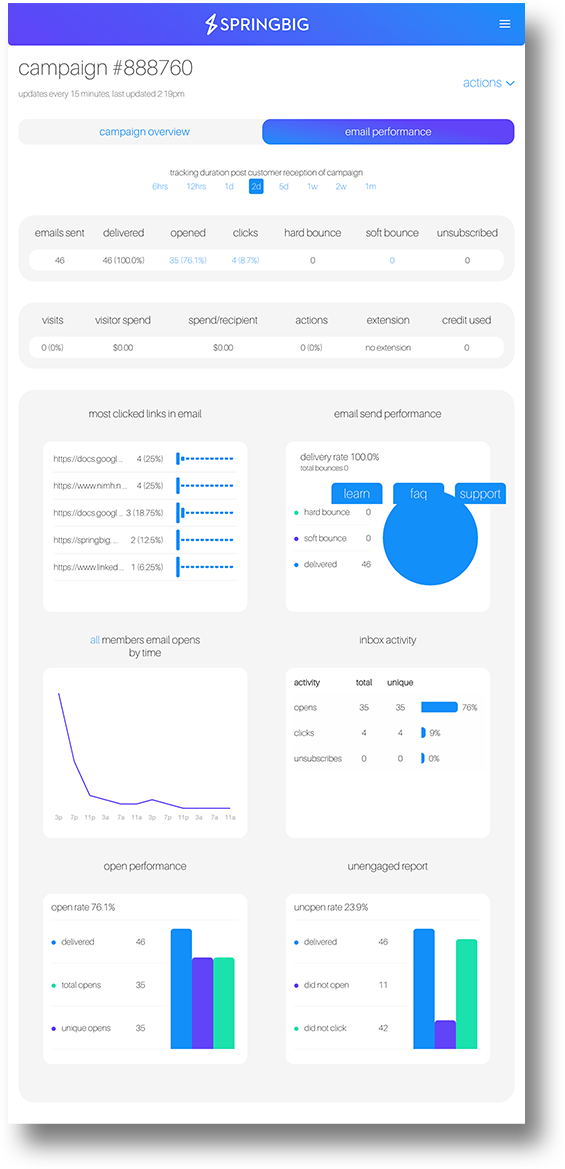
Part 9: Email Reporting
View additional reporting for your email campaigns including different timeframes for variable tracking of customer reception, the ability to download an export of this data, resend the same campaign to the same audience, make edits and resend, or resend to recipients that did or did not open or click on your email campaign.
KPI breakdown:
How many emails were sent
How many emails delivered
How many recipients opened the email
How many recipients clicked on a link (this looks at clicks on any links)
Hard bounce – emails that were not delivered, due to wrong email address or other causes
Soft bounce – emails that were not delivered due to temporary causes like server issues or full inboxes.
Unsubscribed – how many recipients unsubscribed after receiving this campaign
Visits / Visitor Spend / Spend per receipient – how many recipients visited and made a purchase after receiving this campaign
Actions – how many redemption actions were made if an extension was included
Extension – what extension was included, if any
Credits used – how many credits were used with this campaign
Performance breakdown:
Most clicked links in email – top links will be displayed here
Email send performance – how many emails were delivered or bounced
Email opens by time
Inbox activity – opens, clicks, and unsubscribes
Open performance – delivered, total opens, unique opens
Unengaged report – unopen rate, delivered, did not open, did not click
View our full email reporting guide and this article on email best practices from our Messaging Director.
Part 10: Email KPI Overview
Email marketing is an effective way to reach out to your target audience and drive engagement and sales. Understanding email marketing KPIs (key performance indicators) is essential to measure the success of your campaigns. Here are some key email marketing metrics and their definitions:
Open Rate: The percentage of email recipients who opened your email. Open rates can indicate the effectiveness of your subject line and the appeal of your content and business.
Click-Through Rate (CTR): The percentage of email recipients who clicked on at least one link within your email. CTRs can measure the effectiveness of your email content and the clarity of your calls to action.
Unsubscribe: Email recipients who clicked on the unsubscribe link in your email or the unsubscribe button within their email app. Unsubscribe rates can indicate that your email content is no longer relevant or that you are sending too many emails or that they are no longer interested in products or services from your business.
SPAM Complaint: The count of email recipients who marked your email as spam. High spam complaints can hurt your sender reputation and cause your future emails to land in recipients’ spam folders or even worse, not delivered at all. Typically customers who never opted in or are not aware of their opt in are the customers who report SPAM. Keeping your list clean of only actual customers will help avoid delivery issues due to high SPAM complaints.
Hard Bounce: An email that is returned to the sender because it was undeliverable. This could be due to an invalid email address or a technical issue. Hard bounces can indicate issues with your email list hygiene. Normally these are typos, or emails given intentionally as fake as time of collection or an indication of a purchased or leased list was used, which should never happen. Usage of a purchased or leased list could blacklist your future email sending.
Soft Bounce: An email that temporarily fails because it could not be delivered to the recipient’s inbox. This could be due to issues such as a full mailbox or a temporary technical issue. Soft bounced email recipients are most likely deliverable for future emails.
Part 11: Goals for Email Marketing
Focus on engagement: Aim for high open rates, click-through rates, and low unsubscribe counts. These metrics indicate that your email content is resonating with your audience and driving engagement. If your emails do not have links or have limited links, then focus more on open rates than CTR.
Open Rate engagement for traditional retailers is typically seen as a success if your open rate is between 10-15%. On average our merchants have open rates of 30-45%, much higher than traditional retailer KPIs.
Open rate KPIs are determined by your list and segmentation. If you send to customers who haven’t shopped in more than 1 year, your open rate will be very low, but if you send to highly engaged customers who shop twice a week your open rate could be extremely high.
Email is all about engagement. If your metrics and KPIs drop, your future emails could be affected. Providing relative and meaningful content and offers within your email marketing will help ensure you stay on the right side of email deliverability.
Keep an eye on spam complaints: High spam complaint rates can harm your sender reputation and reduce the effectiveness of your email campaigns. Don’t send to recipients who are not customers. If they haven’t shopped in over a year, try a last chance email and if they still dont open, you may want to consider these customers as opted out – reach out to your CSM and we can assist with handling this process of opting out your unengaged email recipients from a specific email campaign.
Segment your email list: Tailor your email content to specific segments of your audience to increase relevance and engagement. Again, think about engagement when sending. Sending to unengaged or non-customers will generate poor results and could affect your future emails.
Monitor your metrics regularly: Regularly review your email marketing metrics to identify trends and adjust your strategy accordingly